“It’s our polite nudge in the ribs to help you and your team stay organised and on task.”
This week’s subject is Resources support play based learning.
Element 3.2.2: Resources, materials and equipment allow for multiple uses, are sufficient in number, and enable every child to engage in play-based learning.
How do educators intentionally select, organise, and rotate resources (both indoors and outdoors) to ensure they are open-ended, diverse, culturally responsive, and flexible enough to actively support and extend children’s self-initiated play-based learning, while responding to individual interests, abilities, developmental needs, and emerging ideas?
Services should strategically and intentionally design learning environments to ensure they’re equipped with a variety of age-appropriate resources to support play-based learning. Consider what strategies your service currently implements and consider how these can be extended to support continual improvement. Educators should ensure they:
-
- conduct regular resource audits in collaboration with children, making them active partners in decision making. Consider what resources and equipment are used most/least, are popular/unpopular and why. What’s outdated or missing parts, and do children have a wish list for new resources? Collaborate with children and obtain input from families about the selection and organisation of materials, equipment and resources
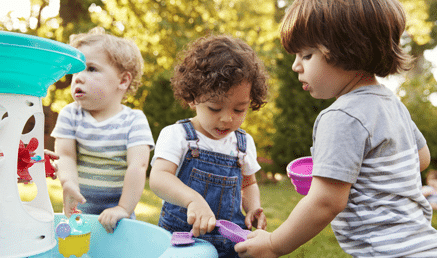
- consistently provide an adequate number of resources for each age group, to minimise wait times and the frequency of disputes amongst children and young people
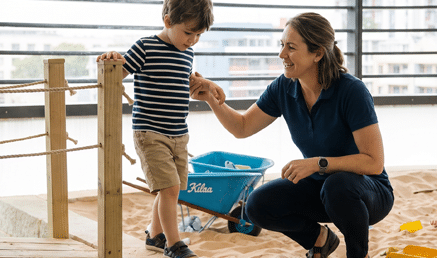
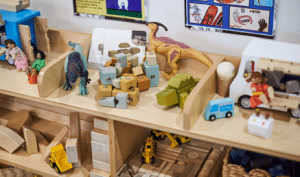
- prioritise open-ended and natural/loose parts materials by intentionally increasing the quantity and variety of loose parts (e.g., fabric scraps, wooden blocks, planks, crates, shells, stones/pebbles, cable reels, ropes, wooden pegs, cardboard tubes) and reduce single-purpose plastic toys/resources
- implement flexible and interest-based rotations (of resources), guided by daily documentation (learning stories, evaluations, floorbooks, photos) to ensure resources directly respond to emerging play themes and children and young people’s current ideas
- only provide appropriate access to digital resources in safe and healthy ways, in line with service policies on the safe use of digital technologies, developed in partnership with children, young people and families. Guide to NQF Pg 215
- seek to visibly and verbally acknowledge connection of language and culture to Country and Traditional Owners and provide opportunities for all children to learn on and care for Country. Guide to NQF Pg 215
- actively source materials that reflect the languages, cultures, abilities, and family backgrounds of children and community (e.g., dual-language books, cooking utensils from home cultures, dolls that represent various cultures and abilities, sensory items for neurodiverse children)
- provide adequate space for free and uninterrupted play across all learning environments
- provide a wide range of age-appropriate resources that challenge and stimulate children’s learning, development, creativity and curiosity
- set up the environment so that it’s flexible to allow children to move resources and equipment between indoors and outdoors to allow them to explore and maximise learning opportunities
- provide opportunities for children and young people to extend their play and learning by leaving out projects to allow them to come back and continue their work
- are intentional when supporting children’s play and learning by asking open ended questions to spark inquiry, and critical thinking
- seek out recycled and upcycled materials from families, members of the community and local businesses (white goods boxes, old CDs, tiles, jars, buttons, newspapers, magazines, clothing for “dress-ups”, bed sheets, electronics for deconstruction etc.)
- design accessible and inviting resource storage and display, using low, open shelving, clear containers and photo labels so children can independently choose, use, and pack away resources, promoting autonomy and sustained play.
- offer a range of open-ended materials and resources that offer appropriate levels of challenge to encourage and support children and young people to explore, experiment and take safe, measured risks, whilst meeting the needs of the varying ages of children and young people (particularly in school age care settings).
- develop “provocation stations” or interest areas that evolve with play. Set up deliberate but flexible invitations to play using open-ended materials that link to observed interests, allowing children to transform and extend these spaces over days/weeks.
Resources:
Guide to the NQF- Element 3.2.2: Resources support play-based learning
The Environment as the Third Teacher
Amplify- Upcycling Inspirations
Promoting, exploring and celebrating Aboriginal and Torres Strait Islander Cultures
We Hear You- Physical environment
Within System7 go to Quality Area 3/Module 9 to submit self-assessment notes and if required, open a QIP issue if you identify any areas of improvement.
The Childcare Centre Desktop has a range of resources to assist services with Quality Area 3. These include Physical Environment Policy, Physical Environment Audit, Environmentally Responsible Policy, Toy and Equipment Cleaning Register, Equipment and Resource Audit-Guide and Record, Safe Use of Digital Technologies and Online Environments Policy and much more.
Resources, NQS Element, Regulation and System7 links:
Childcare Centre Desktop – Childcare Centre Desktop
National Quality Standard – QA 3/ 3.2.2- Resources Support Play Based Learning
National Regulations – 73, 105, 113, 155, 156
System7 Module – QA 3/ Module 9
If you have any questions, send us a note via the Contact page here!