“It’s our polite nudge in the ribs to help you and your team stay organised and on task.”
This week’s subject is: Environmentally responsible.
Element 3.2.3: The service cares for the environment and supports children to become environmentally responsible.
Has your team recently reflected on your quality practices to promote environmental responsibility and how you’re truly embedding sustainability into the daily program, routines, and interactions with children?
Have you paused to consider how the vibrant tapestry of life in a simple garden can ignite a child’s curiosity, excitement and sense of responsibility toward our planet?
Element 3.2.3 highlights sustainable practices within the service while fostering children and young people’s understanding of environmental stewardship, encouraging them to develop habits that protect and appreciate the natural world from a young age. By integrating biodiversity education, ECEC services can create inclusive, sustainable learning environments that promote exploration and play-based learning.
Australia stands out as one of only 12 ‘megadiverse’ countries globally, boasting over one million species that contribute to the foundation of all life on earth. Healthy biodiversity is essential, supporting ecosystems that provide clean air, water, and food. In ECEC, exploring this diversity helps children and young people recognise the interconnectedness of living things, instilling a sense of environmental responsibility early on. This approach not only addresses ecological challenges but also fosters eco-literacy, enabling children to make sustainable choices for the future.
To embed biodiversity education, ECEC educators can draw on a range of hands-on, environmentally responsible practices:
-
-
- Set up indoor gardens and living potted plants, allowing children and young people to care for living organisms, watering and observing their growth and learning about life cycles and ecosystems
-
- Bring nature indoors; incorporate natural materials like wood, stones, shells, pinecones, leaves, and feathers into play areas for sensory sorting and creative activities
-
- Create a ‘treasure shelf’ to display collected items from the natural environment such as acorns or bark, encouraging discussions on textures, shapes, and the diversity of nature
-
- Explore the outdoor environment with children and young people by conducting a biodiversity audit. Adapt to suit their stages of development, identifying plants, animals/insects, and habitats, observing local species and discussing their significance. Map play spaces and document findings to inform program planning.
-
- Incorporate open ended nature play learning experiences into the everyday program to foster creativity and a lifelong appreciation for biodiversity:
-
- Set up a mud kitchen using wood and other natural materials
-
- Create an obstacle course using logs and other natural materials
-
- Create a worm farm
-
- Building with loose parts
-
- Digging in dirt, making mud pies
-
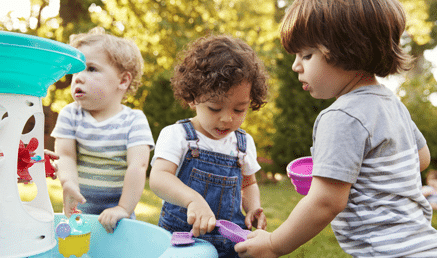
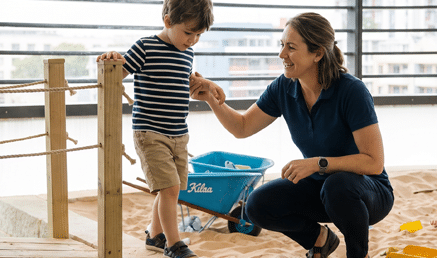
- Water and sand play; play kitchens, floating and sinking experiments, building sandcastles with buckets and molds, sand drawing and artworks
-
- Plan a Bush Kinder program
-
- Bug hunting with a magnifying glass
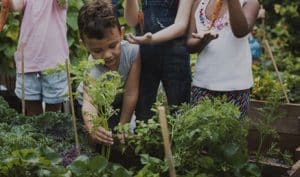
- Growing and caring for herbs and vegetables.
-
By prioritising biodiversity exploration in ECEC settings, services empower children to become active guardians of their environment. These experiences promote curiosity, respect, and responsibility, fostering an innate connection to nature, laying the groundwork for a more sustainable world.
Resources:
Guide to the NQF: Element 3.2.3: Environmentally responsible
Exploring Biodiversity and Conservation in Early Childhood Practice
Sand and Water Activities for Early Years
Environmental Education NSW- Early Years
The Spoke- Bush kinder program: taking the classroom and learning outside
Bug-tastic bug hunt for preschoolers
Within System7 go to Quality Area 3/ Modules 11, 12, 13 & 14 to submit self-assessment notes and if required, open a QIP issue if you identify any areas of improvement.
The Childcare Centre Desktop has a range of resources to assist services with environmental responsibility. These include Environmentally Responsible Policy, Sustainability Commitment Statement, Sustainability Audit, Environmental and Sustainability Officer Position Description and much more.
Resources, NQS Element, Regulation and System7 links:
Childcare Centre Desktop – Childcare Centre Desktop
National Quality Standard – QA 3/ 3.2.3- Environmentally responsible
National Regulations – 73, 74, 110
System7 Module – QA 3/Modules 11, 12, 13 & 14
If you have any questions, send us a note via the Contact page here!