“It’s our polite nudge in the ribs to help you and your team stay organised and on task.”
This week’s subject is: Inclusive environment.
Element 3.2.1: Outdoor and indoor spaces are organised and adapted to support every child’s participation and to engage every child in quality experiences in both built and natural environments.
How intentionally does your service design and adapt its indoor and outdoor environments to ensure every child feels included, capable, culturally safe and supported to participate meaningfully in all aspects of the program?
Services intentionally create inclusive environments that actively support every child’s access, participation, engagement and sense of belonging. Under the National Quality Standard, inclusive environments are not simply about physical access, they are environments that are thoughtfully organised, flexible, responsive and reflective of the diverse strengths, rights, cultures, identities, abilities and educational needs of all children.
The Guide to the NQF highlights that inclusive environments are welcoming, adaptable and promote equitable opportunities for participation. Educators are expected to critically reflect on how both built and natural environments are arranged and used to support all children to confidently engage in experiences, interactions and routines. An inclusive environment should therefore be evident not only in the physical setup, but also in the daily decisions educators make about resources, routines, supervision, accessibility and children’s participation.
Importantly, inclusive environments should uphold every child’s dignity and rights while fostering agency,independence and meaningful engagement. Children should see themselves, their families, cultures and identities reflected within the environment and feel confident that they belong within the service community.
Together with your team, reflect on how your service currently promotes inclusion across indoor and outdoor environments and consider what further improvements could strengthen equitable participation for all children.
Consider the following quality practices and modifications to foster inclusive environments:
-
- Consulting with children about the environment and involving them in decisions about how spaces are arranged, adapted and used throughout the day.
- Intentionally arranging environments to minimise overcrowding, excessive noise and unnecessary waiting periods that may create stress or barriers for some children.
- Regular audits of indoor and outdoor spaces to ensure they are accessible and engaging for all children. Conduct audits and utilise reflection tools to assess path/walkways, furniture placement, and resource accessibility. Involve families, specialists, and children in these audits to gain diverse and wholistic perspectives on inclusion. For example, consider whether a child using a wheelchair can navigate outdoor play areas or if sensory-friendly spaces are available for children who may become overwhelmed or require opportunities for emotional regulation and sensory breaks.
- Strategically selecting and arranging a wide variety of open-ended resources and materials that cater to varied interests and developmental stages. Open-ended materials, such as blocks, fabrics, or natural elements like sand and water, encourage creative exploration, flexible thinking and are adaptable to different abilities & interests. Ensure these resources are sufficient in number to minimise waiting times and promote collaborative play.
- Creating calm and predictable spaces for children who may become overwhelmed or require opportunities for emotional regulation and sensory breaks.
- Providing spaces that encourage both collaborative and independent play experiences, allowing children to engage in ways that suit their individual needs, preferences and confidence levels.
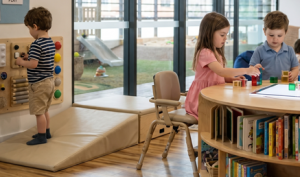
- Select and arrange furniture and equipment to support diverse needs. Provide low tables for children with mobility challenges, create clear pathways to avoid obstacles, and ensure resources are within reach for all ages and abilities. Flexible setups allow children to choose how they engage, fostering independence and agency.
- Provide a balance of active, quiet, sensory, creative and restorative spaces that support children’s differing emotional, physical and sensory needs throughout the day.
- Ensure resources and materials reflect diversity, inclusion and equity, including Aboriginal and Torres Strait Islander perspectives, cultural diversity, family structures, abilities, gender diversity and community identities.
- Ensure visual displays in the classroom and outdoors (e.g., labels, signs) are clear and accessible to children with varying levels of literacy and language skills.
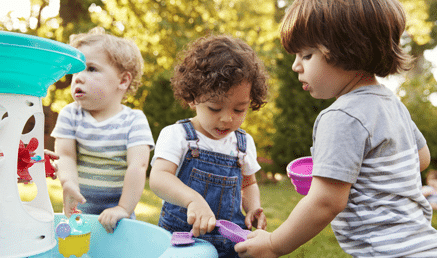
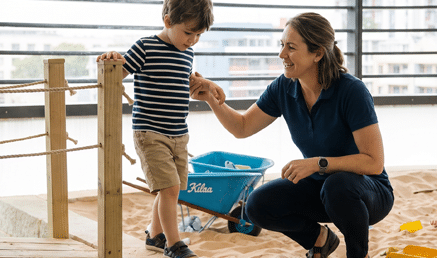
- Incorporating both built and natural environments to provide rich and varied learning opportunities. Natural elements such as gardens, water, sand, rocks, trees and loose parts can promote sensory exploration, wellbeing, creativity and connection with nature. Ensure these areas are accessible to all children.
- Use accessible visual supports such as photos, symbols, visual schedules and routines, multilingual signage and clear labels to support communication, transitions and children’s independence.
- Modifying furniture, equipment or layouts to support mobility, independence and safe access.
- Providing sensory supports such as noise-reducing headphones, tactile resources, weighted items, sensory pathways or soft furnishings.
- Provide specialised adaptive equipment, such as supportive seating or communication aids, to facilitate participation (in collaboration with occupational therapists), to ensure equipment meets individual needs.
- Organise group experiences to accommodate different developmental stages, allowing children to engage at their own pace. I.e., pair children with similar interests, provide one-on-one support during group play or arrange an older support child/”buddy” to support younger children.
- Intentional grouping of children by adjusting group size, routines or transition processes to reduce stress and support successful engagement.
Services demonstrating strong practice under Element 3.2.1 recognise that inclusive environments are embedded across all aspects of service operations. Inclusive practice is visible in educator decision-making, planning processes, environmental design, daily routines and interactions with children and families. Educators consistently, intentionally and critically evaluate how environments support equitable access and meaningful participation for every child.
Resources:
Guide to the NQF- Standard 3.2: Use, Element 3.2.1: Inclusive environment, Exceeding guidance for Standard 3.2: Use
ACECQA Information Sheet: Inclusive environments, Babies and outdoor play, The environment as the ‘Third Teacher’
Amplify- Simple ways to promote inclusive play in any early learning environment: Sensory processing
Creating inclusive learning environments
Good for everyone – understanding and practising inclusive education
The Sector- Inclusion in early childhood education: A shared responsibility
Within System7 go to Quality Area 3/ Modules 6, 7 & 8 to submit self-assessment notes and if required, open a QIP issue if you identify any areas of improvement.
The Desktop has a range of resources to assist services with inclusive environment. These include the Physical Environment Audit, Physical Environment and Parent Journey Procedure, Outdoor Environment and Playground Safety Audit Schedule, Physical Environment Policy, Inclusive Audit and much more.
Resources, NQS Element, Regulation and System7 links:
The Desktop – The Desktop
National Quality Standard – QA 3/ 3.2.1- Inclusive Environment
National Regulations – 73- Educational program, 75- Information about educational program to be kept available, 76- Information about educational program to be given to parents, 105- Furniture, materials and equipment, 109- Toilet and hygiene facilities, 113- Outdoor space- natural environment, 157- Access for parents
System7 Module – QA3/ Modules 6, 7 & 8
If you have any questions, send us a note via the Contact page here!